
Common hair loss myths you should ignore (2026 evidence guide)
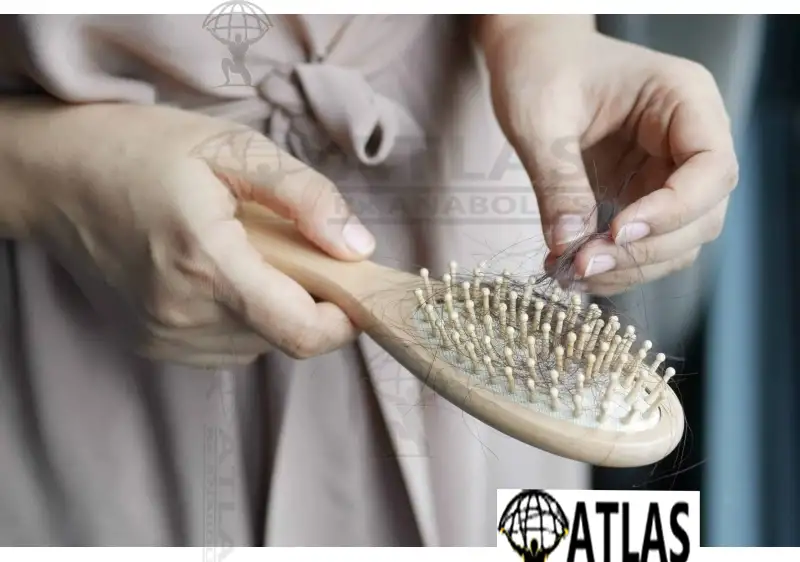
If you are reading this, chances are you have typed “why is my hair thinning” into Google at 11 p.m., or you have noticed extra strands on your pillow and felt your stomach drop. You are not alone: by age 50, more than 50% of men and 40% of women experience noticeable hair loss [citation:1]. Yet the noise around hair loss myths is so loud that many people waste years on ineffective “natural” fixes or panic that a baseball cap is accelerating their baldness. This guide is your reset button. We separate inherited folklore from hair loss facts using 2026 research, and we answer the exact “People Also Ask” questions that keep you up at night.
Straight to the truth
- 1. Baldness only from mother’s side
- 2. Hats cause baldness
- 3. Shampooing makes hair fall out
- 4. Stress = permanent baldness
- 5. Cutting makes hair thicker
- 6. Transplants look fake
- 7. Thick beard = no baldness
- 8. Hair vitamins are magic
- 9. Dandruff destroys follicles
- 10. Bald grandfather = doomed
- 11. Bald = high testosterone
- 12. Dye makes hair clump out
- 13. Scalp massage cures baldness
- FAQs – quick answers
10‑second myth vs. fact
| Myth | Reality (2026) |
|---|---|
| Baldness comes from your mother’s dad. | hair loss genetics come from both parents, plus 200+ genes. |
| Hats suffocate follicles. | Follicles get oxygen from blood, not air. Hats are innocent. |
| Daily shampoo causes shedding. | You lose telogen hairs anyway; shampoo is just the messenger. |
| Stress = permanent baldness. | Telogen effluvium is temporary. But chronic stress can unmask genetics. |
| Only men lose hair. | 40% of hair-loss sufferers are women. |
Myth 1: “Baldness is inherited exclusively from your mother’s father”
The claim: You only need to look at your maternal grandfather to know your future hairline. The truth: This is one of the most tenacious male pattern baldness myths, and it ignores half your family tree. While the AR gene (androgen receptor) is located on the X chromosome—which you do get from your mother—that is just one piece of a huge genetic puzzle.
Dr. Alan Bauman, a board-certified hair surgeon, explains: “Baldness is influenced by many genes from both parents, plus hormones, age, and even environmental factors.”
[citation:3]. A 2025 genome-wide analysis confirmed over 200 independent genetic variants linked to androgenetic alopecia. So if your father has a full head of hair but your mother’s brother is bald, you are still at risk—but not doomed.

hair loss facts: family history on either side raises your odds. Do not blame your mom’s dad alone.
Myth 2: Does wearing a hat cause baldness? (The hat myth)
You love your favorite cap, but a friend warned you it “suffocates” your scalp. Rest easy: wearing hats does not cause baldness. Hair follicles receive oxygen and nutrients exclusively via the bloodstream, not from the air [citation:1]. A hat cannot choke a follicle. The only exception is if the hat is painfully tight and worn daily for years—that can cause traction alopecia, a mechanical breakage of the hair shaft, not pattern baldness.
One 2026 survey from the National Hair Loss Medical Aesthetics confirms: “Hats do not suffocate hair follicles. True balding begins beneath the surface.”
[citation:6]. So keep wearing your cap; it is not accelerating your hairline recession.
Myth 3: Does shampooing your hair every day make it fall out?
This hair shedding myth terrifies millions. You see strands in your hands while washing and assume the shampoo caused it. In reality, the average person loses 50 to 150 telogen (resting) hairs daily. Shampooing simply dislodges hairs that were already detached and waiting to exit [citation:5]. If you skip washing for two days, you will see more hairs in the drain on day three—not because you harmed your scalp, but because they accumulated.
Infrequent washing can actually harm scalp health: sebum buildup, inflammation, and even dandruff can worsen shedding. Gentle, sulfate-free shampoo is your friend.
Myth 4: Can stress permanently stop hair growth?
Severe stress—surgery, grief, extreme illness—can trigger telogen effluvium, a condition where up to 70% of follicles prematurely enter the shedding phase [citation:3][citation:7]. This looks alarming: handfuls of hair come out. But here is the hair loss fact: it is almost always temporary. Once the stressor resolves, hair regrows within 3 to 6 months.
However, there is nuance. Chronic, grinding stress can elevate cortisol and inflammation, which may accelerate androgenetic alopecia if you are already genetically susceptible [citation:3]. It does not cause baldness from scratch, but it can pull the timeline forward.
Myth 5: Does cutting your hair make it grow back thicker?
This is pure cosmetic illusion. Hair is dead keratin; shaving or trimming does not alter the living follicle beneath your scalp. A razor-cut tip may feel coarser for a few days because it is blunt, but the diameter and growth rate remain unchanged [citation:5]. If you want thicker hair, you need to target the follicle—not the ends.
🔬 Myth 6: Do hair transplants look fake and unnatural?
This belief is stuck in the 1990s, when “pluggy” doll-hair transplants were the norm. Modern FUE (follicular unit extraction) and FUT techniques transplant 1 to 4 hair grafts individually, mimicking nature’s grouping. A skilled surgeon recreates a natural hairline with micro irregularities. In 2026, if a transplant looks obvious, it is the surgeon’s skill—not the procedure itself—that is to blame.
Myth 7: Is it true that if you have a thick beard you can’t go bald?
Look around: plenty of men with dense beards have slick crowns. Beard hair and scalp hair have different sensitivity to dihydrotestosterone (DHT). For many, DHT stimulates thick beard growth while simultaneously miniaturizing scalp follicles. They are not opposite; they are parallel effects of the same hormone.
Myth 8: Do hair vitamins actually work if you aren’t deficient?
The supplement industry sells billions of dollars of biotin, collagen, and “hair growth” gummies. Yet the FDA has long stated that for non-deficient individuals, there is no evidence these pills change hair loss outcomes. In fact, 21 CFR 310.527 clarifies that ingredients like biotin, amino acids, and B-vitamins marketed as OTC hair growers lack adequate effectiveness data and are considered misbranded if they claim to treat baldness [citation:2].
If you have low ferritin or vitamin D, supplementation helps—but only if you are truly deficient. A 2026 Healthline review reinforces: “Biotin only helps people who don’t get enough biotin, which is uncommon.”
[citation:9].
Myth 9: Does dandruff cause permanent hair loss?
Dandruff (seborrheic dermatitis) causes itching, flaking, and inflammation. If severe and untreated, it can cause temporary shedding, but it does not scar follicles. Once the inflammation is controlled with antifungal or anti inflammatory shampoos (ketoconazole, zinc pyrithione), the hair typically regrows. No permanent baldness from flakes.
Myth 10: If my grandfather is bald, will I definitely be bald?
Genetics is not a single light switch; it is a dimmer. You share only 25% of your genes with each grandparent. A bald grandfather increases your statistical risk, but it is not deterministic—especially if the other side carries stronger “non-bald” variants.
Myth 11: Is baldness a sign of high testosterone?
This myth confuses the messenger with the message. Men with androgenetic alopecia do not necessarily have higher serum testosterone; they have follicles that are genetically more sensitive to DHT, a metabolite of testosterone. It is about receptor sensitivity, not hormone quantity [citation:3]. Many bodybuilders using anabolic steroids accelerate hair loss—but that is because exogenous testosterone raises DHT levels supra-physiologically, overwhelming follicles.
Myth 12: Will coloring or bleaching my hair make it fall out in clumps?
Chemical processing can make hair brittle and prone to breakage along the shaft. That can look like “shedding” but it is breakage, not follicle loss. Your root is intact. Unless you chemically burn your scalp (which is rare with proper application), color does not induce permanent baldness.
Myth 13: Does standing on your head or massaging oil cure baldness?
Blood flow is necessary for hair growth—but decreased blood flow is a result of miniaturization, not the cause [citation:1]. Inverting yourself or rubbing coconut oil cannot reverse genetic programming. Scalp massage feels great and may temporarily reduce stress, but it will not resurrect a dormant follicle.
Experimental treatments: hype vs. 2026 reality
Because hair loss myths also extend to “miracle” stem cell and exosome clinics, we need to discuss what is actually FDA-approved. As of February 2026, the FDA has not approved any stem cell therapy for hair loss [citation:4]. Yet you will see clinics charging $15,000 for “stem cell injections.” Legitimate research is promising, but it is still investigational.
| Treatment | Claimed mechanism | FDA status (2026) | Typical cost (USA) |
|---|---|---|---|
| Adipose-derived stem cells | Reactivate dormant follicles via growth factors | Not approved; investigational | $15,000–$30,000 |
| Exosome topicals | Vesicles with regenerative signals | No approved products; many are counterfeit | $1,000–$5,000 (often useless) |
| PRP (Platelet Rich Plasma) | Concentrated growth factors from your blood | Off-label; device cleared, not "therapy" | $1,500–$3,000/session |
| Low Level Laser Therapy (LLLT) | Photobiomodulation (650nm) | FDA-cleared as devices | $400–$1,200 (home units) |
| Minoxidil / Finasteride | Vasodilation / 5-alpha-reductase inhibition | FDA-approved for AGA | $20–$100/month |
Risk awareness: what actually harms hair
| Risk category | Examples | Reversibility |
|---|---|---|
| Medication-induced | Anticoagulants, some antidepressants, isotretinoin | Usually reversible after discontinuation |
| Traction alopecia | Very tight ponytails, extensions, dreadlocks | Early stage: reversible. Scarring stage: permanent |
| Nutritional deficiency | Low iron, vitamin D, protein crash diets | Correctable with supplementation |
| Smoking | Reduces scalp blood flow by 30%; 1.6x risk increase | Partially reversible after cessation [citation:7] |
| Anabolic steroids | Exogenous testosterone → high DHT | May accelerate genetic loss irreversibly |
When to stop guessing and see a professional
If you have sudden patchy loss, rapid shedding, or scalp redness, consult a board-certified dermatologist. They will run ferritin, vitamin D, thyroid panel (TSH), and perhaps a scalp biopsy. Early intervention—especially with androgenetic alopecia—preserves follicles. Waiting for “natural” remedies often means the miniaturization becomes permanent.
“Hair loss is complex, but it is not hopeless. Personalized plans guided by science deliver visible results.”
— National Hair Loss Medical Aesthetics, 2026 [citation:6].
Related resources from Atlas Rx Anabolics: For those exploring pharmaceutical options, we offer clinically-backed information on Finasteride IP Tablets Sigpecia 1mg and DUTANOL DUTASTERIDE 0.5MG PER TAB. Also visit our Hair and Beauty category. *Prescription products; consult a physician.*
People also ask: straight answers
Does frequent masturbation cause baldness?
No. This is an ancient myth with zero biological plausibility. Ejaculation does not alter serum DHT enough to influence follicles.
Will my hair grow back if I just stop washing it?
No. Avoiding shampoo does not reverse genetics; it may worsen scalp inflammation.
Is hair loss always permanent for women?
Not at all. Female pattern hair loss can be managed with minoxidil, anti-androgens, and lasers. Postpartum shedding always recovers.
Do hair transplants hurt?
With local anesthesia, discomfort is minimal. Most patients return to work in 2–3 days.
Can smoking marijuana cause hair loss?
Limited evidence, but tobacco smoking is clearly linked to reduced scalp blood flow and higher risk (1.6x) [citation:7]. Cannabis requires more study.
Does wearing a cap prevent hair loss?
No—it does not prevent or cause genetic baldness. Sun protection might reduce scalp burn, but no prevention.
Trust your sources, not folklore
At Atlas Rx Anabolics, we believe in informed decisions. Whether you are exploring hair loss prevention or need evidence-based pharmaceuticals, consult a professional and verify every claim.
Authoritative sources used: [citation:1] Dr. Jeffrey Wise, board-certified plastic surgeon, Jan 2026; [citation:2] 21 CFR 310.527 FDA regulation; [citation:3] New York University / Dr. Jerry Shapiro & Dr. Alan Bauman, Jan 2026; [citation:4] Charles Medical Group / Dr. Glenn M. Charles, Jan 2026; [citation:6] National Hair Loss Medical Aesthetics, 2026; [citation:7] BusinessDay / Aventus Clinic, 2026; [citation:9] Healthline Wellness Wire, Feb 2026.

Shipping Cost
On all orders is set at $25.00

Secure checkout
Protected by Bitcoin

Offer & gift here
On all huge orders
Be the first to comment